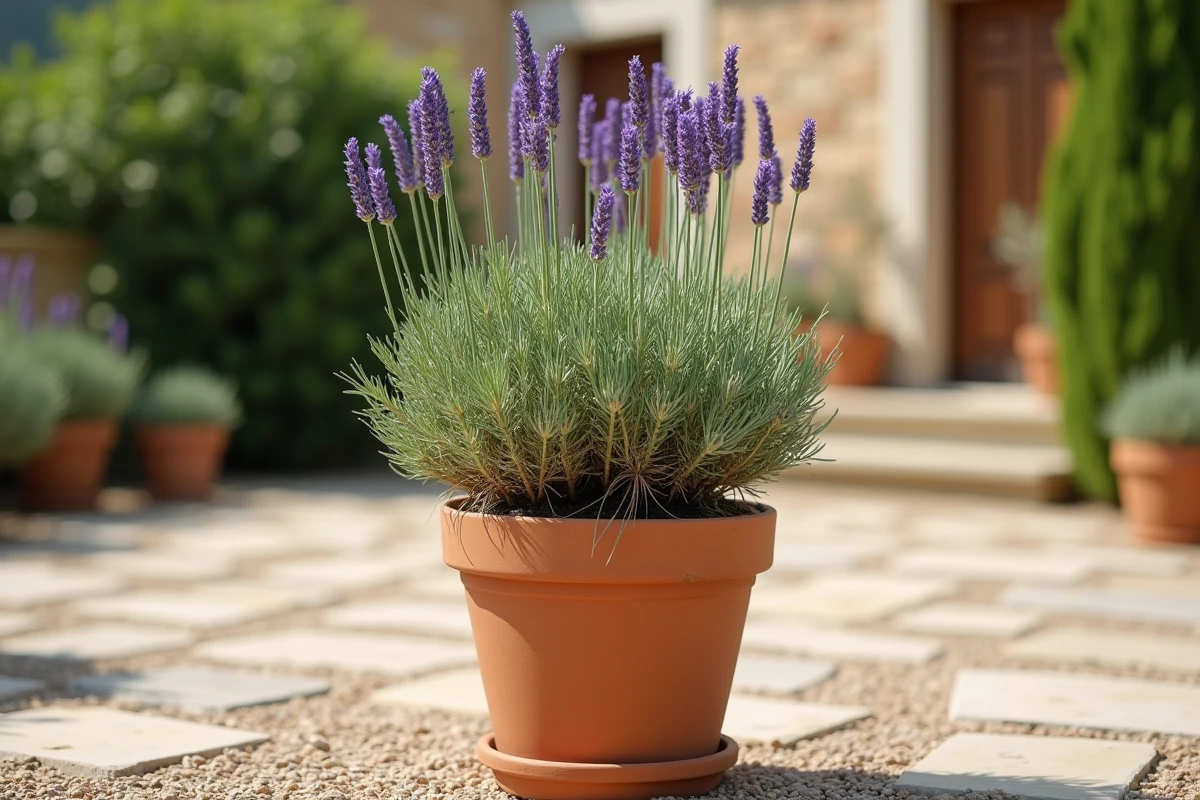
A drooping lavender rarely indicates a lack of water. In most cases, we observe a root problem, unsuitable soil, or aging of the clump that watering will not correct. Identifying the exact cause before intervening helps avoid worsening the situation.
Root confinement in pots: the overlooked cause of drooping lavender
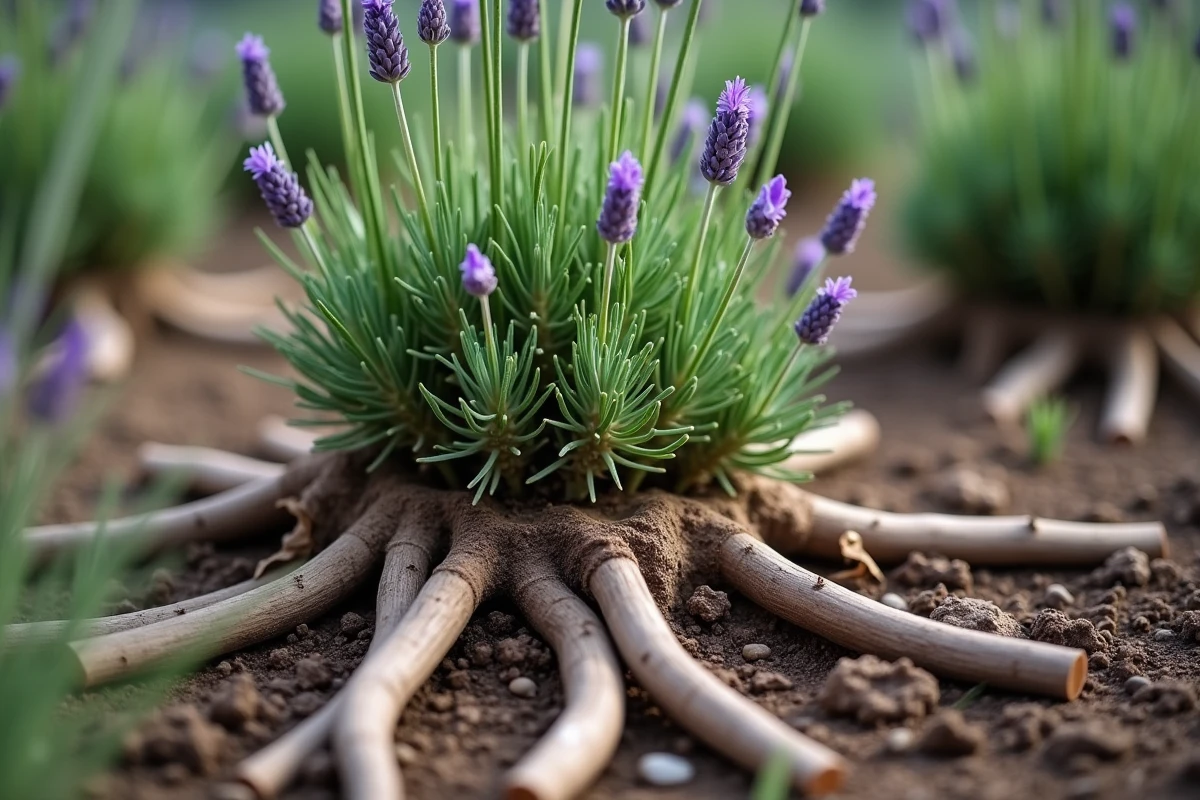
Lavender develops a taproot system that requires depth. In pots, this taproot hits the bottom of the container within a few months. The roots coil, form a compact bun, and lose their absorption capacity.
The result is visible on the surface: the peripheral stems spread out, the growth becomes loose, the plant appears to droop while the foliage remains green. The reflex to water more exacerbates the problem by saturating a substrate already poorly drained by the root mass.
We recommend removing the root ball to inspect the roots. If they form a dense circular network against the walls, the pot volume is insufficient. A container at least twice the diameter of the clump, with a good drainage layer (gravel, pumice), allows the roots to resume vertical growth. To understand why lavender droops, one must first look beneath the root ball, not above it.
Root rot and excess moisture in the soil
Lavender is a garrigue plant. Its natural habitat is a stony, calcareous soil where water never stagnates. Clay or compact soil causes root asphyxiation within a few weeks during rainy periods.
The fungus Phytophthora develops precisely under these conditions. Symptoms appear asymmetrically: one part of the clump droops and browns while the other remains apparently healthy. Pulling on an affected stem, it detaches without resistance, the tissues at the base are black and soft.
Quick drainage diagnosis
Dig a hole the depth of a spade next to the lavender and fill it with water. If the water takes more than a few hours to disappear, the soil retains too much moisture for this plant. The soil should also smell earthy, not muddy.
- Sticky and gray soil at depth: insufficient drainage, amend with coarse gravel and river sand before replanting
- Black or brown roots instead of white: active rot, the affected part will not regenerate
- Sour smell at the base of the clump: fermentation of root tissues, a sign of prolonged excess water
The solution is not to reduce watering if the soil itself is problematic. Replanting lavender on a raised mound often remains the only effective action in clayey soil.
Aging lavender: the bare center of the clump
After four or five seasons, a lavender that has not been regularly pruned becomes bare in the center. The old, gray, woody stems no longer produce new shoots. The outer, younger stems continue to grow and spread under their own weight, giving that characteristic drooping silhouette.
This phenomenon has nothing to do with a disease. It is the normal cycle of the plant. Lavender does not regrow on old wood, unlike rosemary, for example. Pruning into dry wood will not stimulate any new growth.
Preventive pruning and replacement
The annual pruning after flowering should remove the upper third of the stems while staying within the green and flexible part. We always prune above the first visible leaves, never below. This discipline keeps the clump compact for several years.
When the center is already bare and woody, the clump is at the end of its productive life. It is better to replace it with a young plant than to attempt a rejuvenation pruning that is doomed to fail. Taking cuttings from semi-ripe stems taken from the still green parts allows for renewing the stock at no cost.
Post-planting stress and temporary wilting of stems
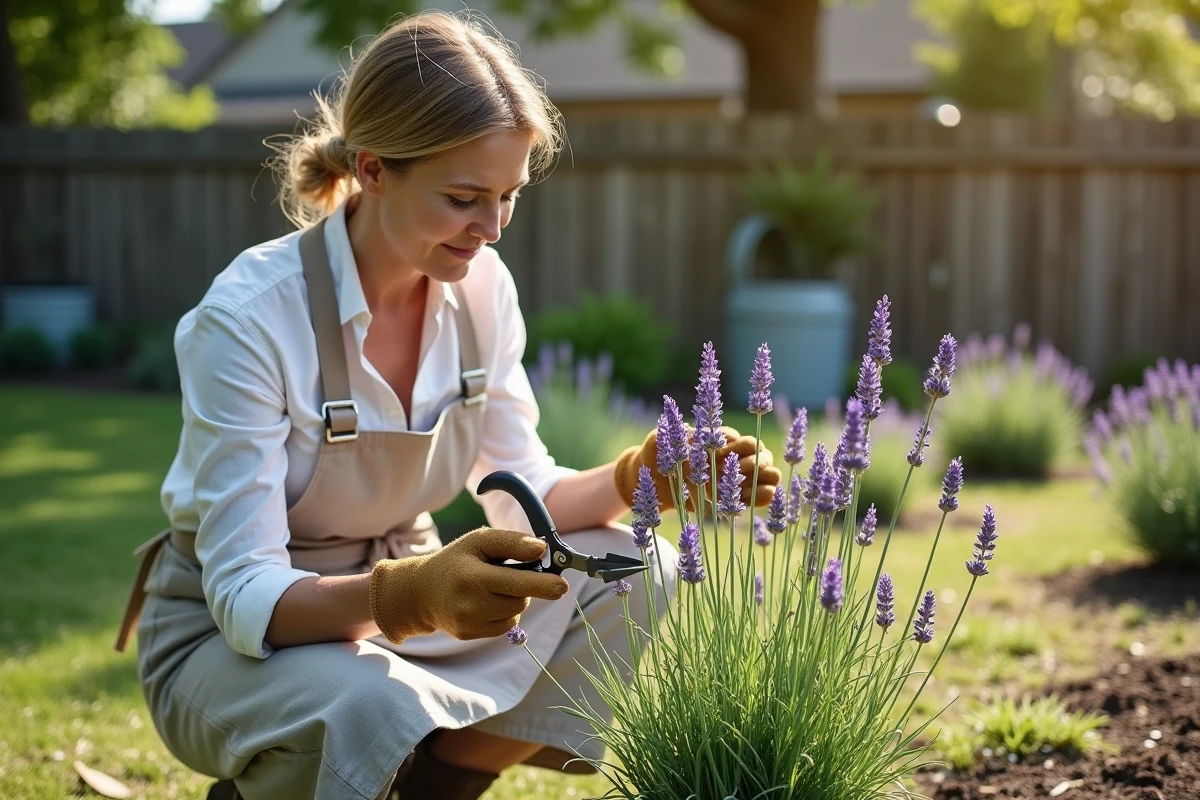
A freshly planted lavender that droops in the following days is not necessarily in danger. The roots, confined in their nursery ball, have not yet colonized the surrounding soil. The plant transpires more than it absorbs, especially in hot weather.
Post-planting wilting is distinguished from a fundamental problem by a simple criterion: the stems regain their turgor in the morning when it is cool. If the drooping persists even in the coldest hours, the problem lies elsewhere.
- Water moderately at planting, then quickly space out the watering to encourage deep rooting
- Mulch with light gravel rather than pine bark, which retains moisture and acidifies the soil
- Preferably plant in the fall to allow roots to settle during the cool season, before summer stress
- Protect from drying winds in the first weeks with a light cover if the site is exposed
Iron chlorosis on lavender in poorly drained calcareous soil
The yellowing of the foliage associated with drooping stems may signal iron chlorosis. The soil contains iron, but a pH that is too high or excess water prevents the plant from assimilating it. The leaves yellow between the veins, which remain green.
This diagnosis often surprises, as lavender tolerates calcareous conditions well in natural settings. The problem arises when frequent watering alters the soil chemistry and blocks iron absorption. Reducing watering often suffices to correct chlorosis without the need for iron chelate.
A drooping lavender always tells something about its soil or roots. Before pruning, watering, or treating, the first useful action remains to partially unearth the root ball to observe the actual condition of the root system. That is where the answer lies, not in the foliage.