
Two working days minimum to receive an Asos package in France, even when selecting the fastest option available. This uncompressible minimum raises questions for shoppers used to the 24-hour delivery offered by other online fashion retailers. To understand this absence, one must examine Asos’s logistics chain, its financial decisions, and the specific purchasing behavior of the French market.
Asos logistics network and express coverage by country
Asos operates from three main warehouses: Lichfield in the UK, Berlin in Germany, and Lonnekerbrug in the Netherlands. Since 2023, the group has reorganized its European flows by focusing next day capacity on the UK and Germany, two markets where the volume of orders justifies the cost of fast delivery.
Read also : Total immersion: the rise of bootcamps in Paris
| Country | Main Warehouse | Next Day Option | Announced Express Delay |
|---|---|---|---|
| United Kingdom | Lichfield | Yes | Next day before 10 PM |
| Germany | Berlin | Yes | Next day |
| France | Lichfield / Lonnekerbrug | No | Minimum 2 working days |
France is supplied by hubs that do not have late departure slots to local carriers. A package destined for Paris or Lyon first goes through international sorting, which mechanically adds a day to the journey. To offer next day delivery, Asos would need to establish a dedicated flow with a French express carrier or set up an advanced stock on the territory, two investments that the group has not pursued.
A detailed article on Asos delivery times precisely describes the options available by country and the discrepancies observed between the UK and the rest of Europe.
You may also like : The role of artificial intelligence in the automotive industry
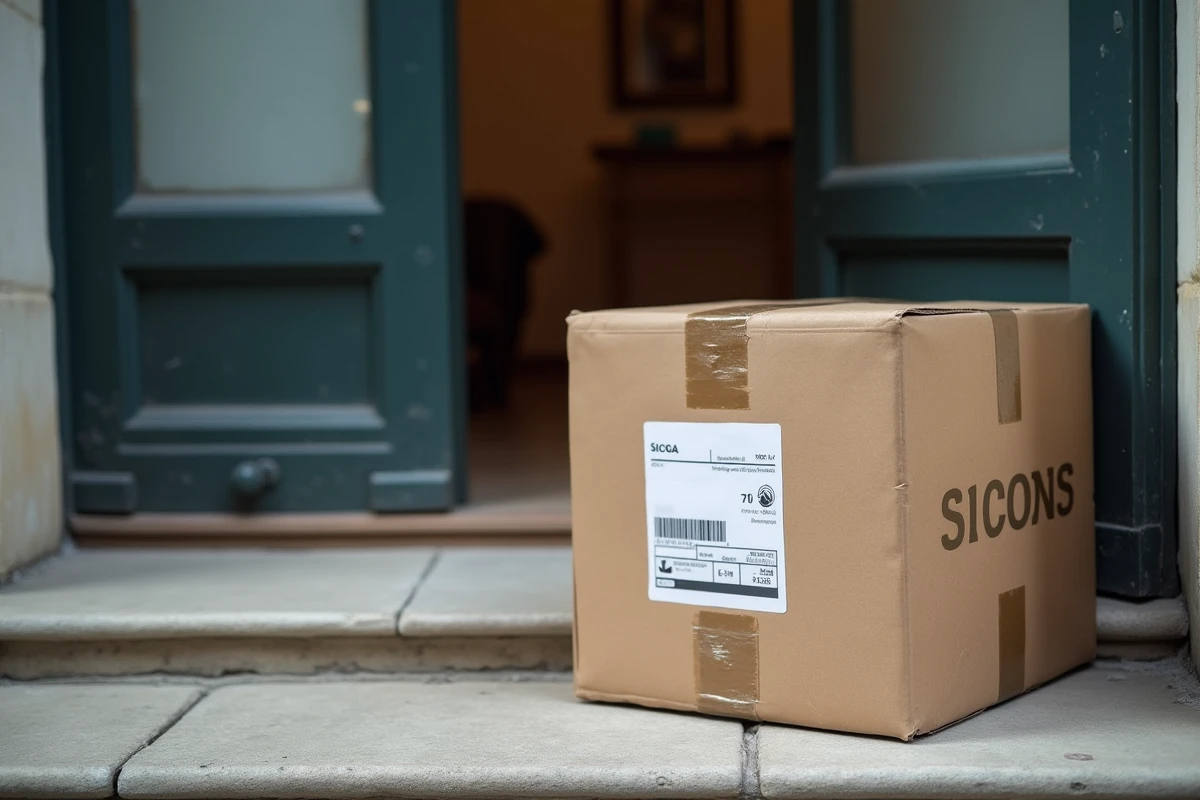
Express transport costs in France and Asos’s decisions
Express carrier rates in continental Europe have risen sharply between 2022 and 2023. For a textile e-retailer, the extra cost of 24-hour delivery to France represents a significantly higher burden than in the UK, where the network of depots is denser and distances are shorter.
Asos explicitly described France as a “highly promotion-sensitive” market in its presentation to analysts during its 2023 annual results. The average basket size is lower than in the UK market, and the margin does not cover the cost differential of a next day shipment.
Passing on the extra cost or absorbing it
Two scenarios present themselves for any e-retailer in this situation:
- Charge the customer for express delivery, risking a drop in conversion rates in a market where buyers seek free shipping.
- Absorb the extra cost into the margin, which degrades profitability on each order shipped in 24 hours.
- Remove the option and standardize the delay, simplifying the customer promise and reducing complaints related to express delays.
Asos has chosen the third path. The group prefers to display a single clear delivery method rather than an underutilized premium option.
French customer buying behavior and actual demand for express delivery
Data from e-commerce panels (Kantar and GfK Commerce Connect, focus France 2023-2024) show that the share of French customers willing to pay extra for 24-hour delivery has been declining since 2022. The opposite trend is on the rise: the demand for free delivery, even if slower, dominates the online clothing sector.
This observation changes the game. If the majority of buyers prefer to wait two or three days rather than spend a few extra euros, investing in express infrastructure has no measurable return.
Free delivery versus fast delivery in textiles
Textiles differ from categories like electronics or food. An item ordered on Monday evening for an event on Saturday does not create the same urgency as a charger cable or a meal. Frequent returns (trying on at home) anyway extend the complete order cycle. Textile purchases tolerate a standard delay of two to four days better.
Asos has reduced the emphasis on express options on its French interface, favoring a simplified journey with a clearly displayed single standard method. This decision follows the logic observed by the panels: less friction at checkout, fewer abandonments related to express rates deemed too high.

Asos Premier and unlimited delivery: an alternative to next day
Rather than offering 24-hour delivery on a per-order basis, Asos focuses on its Premier subscription. This program offers unlimited express delivery (two working days in France) for an annual fee. The model is reminiscent of Amazon Prime, but the minimum delay remains set at two working days, not one.
The Premier subscription serves two functions for Asos: retaining regular buyers and smoothing logistics costs over a predictable volume of orders. For the French customer who orders several times a year, the subscription cancels the unit delivery cost. For Asos, it secures recurring revenue that partially finances flows from Lichfield or Lonnekerbrug.
This choice confirms the overall strategy: Asos prioritizes the consistency of the delay over maximum speed. Guaranteeing two working days systematically costs less and generates fewer complaints than promising a next day that the infrastructure cannot always meet.
The French market is not overlooked by Asos, but it is treated according to its own characteristics: sensitivity to promotions, moderate average basket size, preference for free delivery. As long as these parameters remain stable, next day delivery in France has no economic justification for the group. The gap with the UK and Germany is due to logistical geography and consumption habits, not a disinterest in French customers.