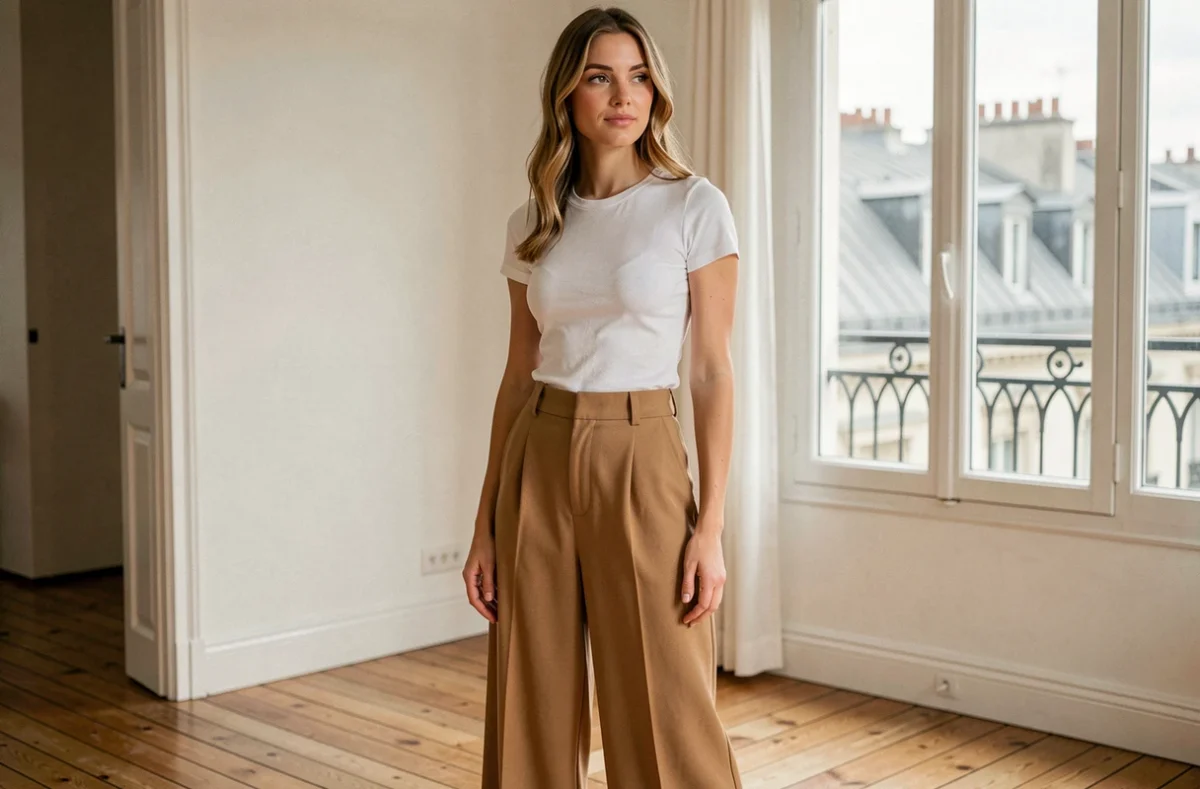
You grab a crop top from a rack, the label says “crop top.” The one next to it, almost identical but a bit longer, is simply labeled “top.” The cut changes by a few centimeters, yet the uses, clothing associations, and even dress code rules differ significantly between these two pieces.
Cut Length and Waistline: The Criterion that Separates Top and Crop Top
The difference is often summarized as “short versus very short,” but that’s a misleading shortcut. A classic top typically falls at least to the hips, sometimes lower. It fully covers the bust and stomach, regardless of posture: arms raised, sitting, leaning forward.
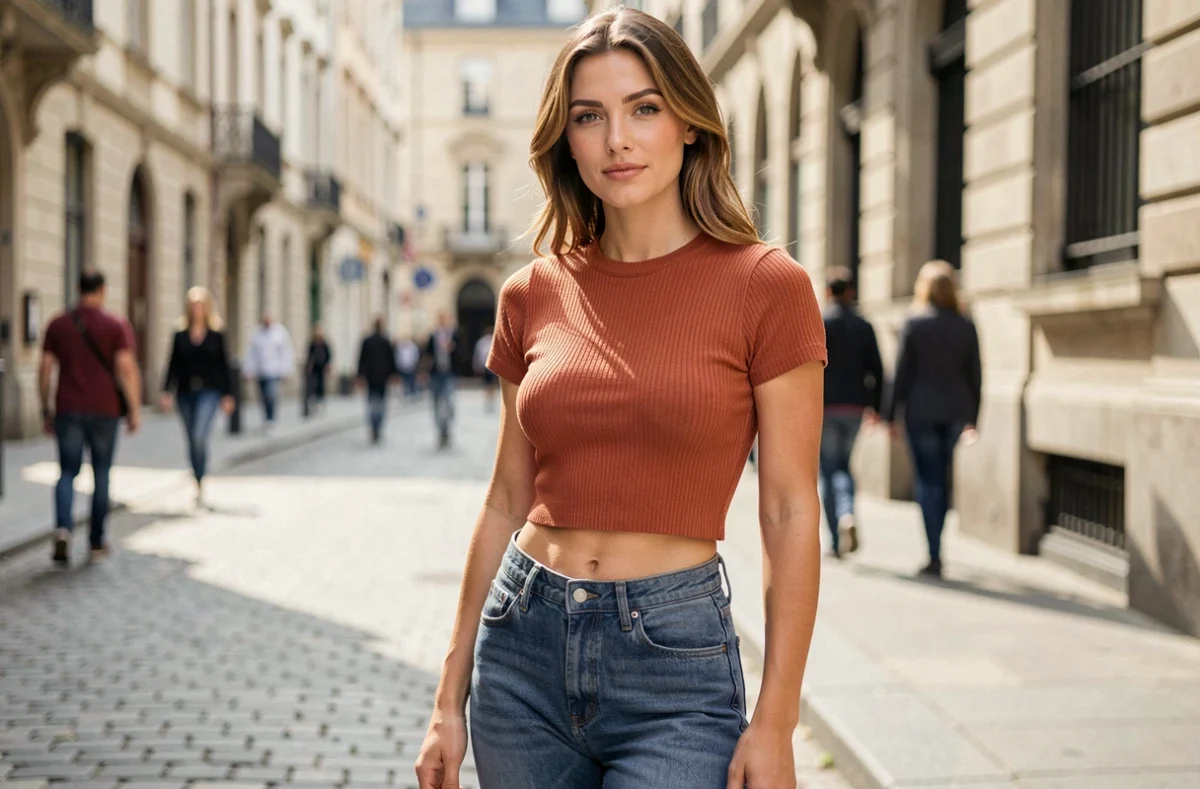
The crop top, on the other hand, stops above the navel or at the waist. The word comes from the English “to crop.” This shortened cut exposes part of the stomach whenever the bottoms worn are not high-waisted. It is this line stopping above the hips that constitutes the true distinguishing criterion, not the style or material.
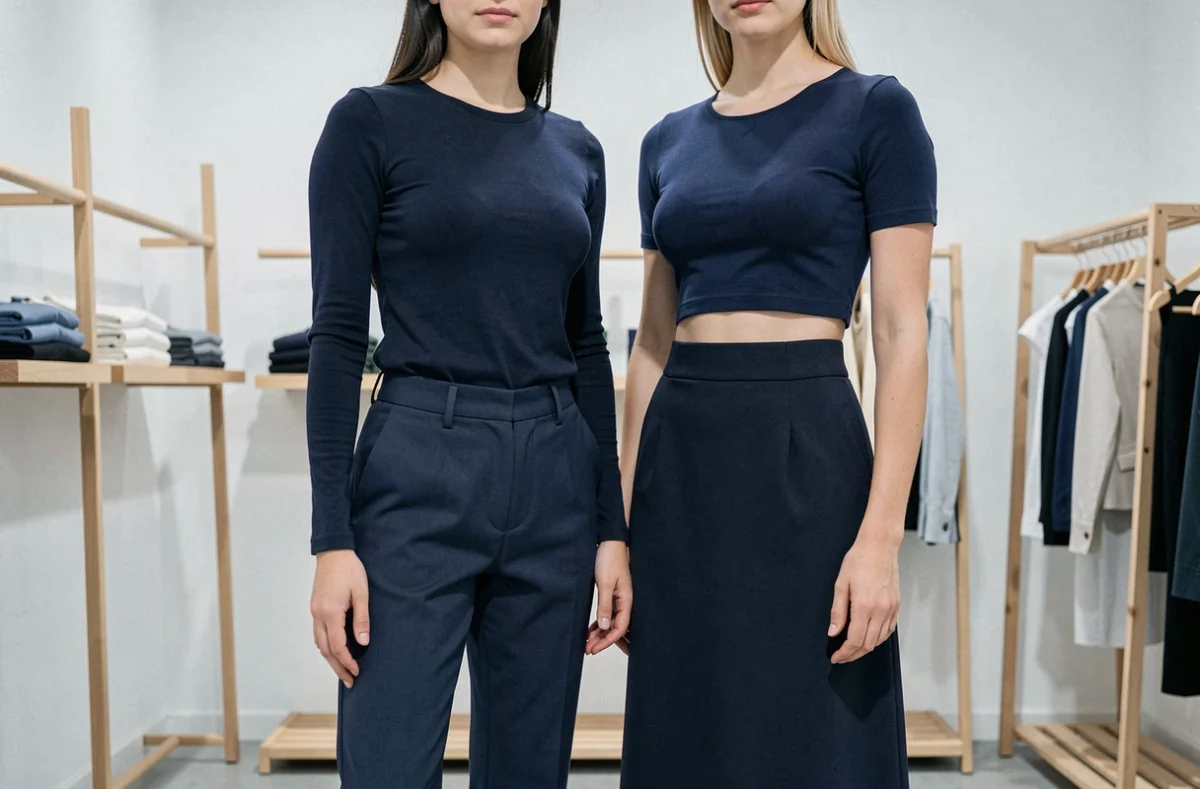
In practice, when we understand the differences between top and crop top, we realize that the same tank top model often exists in both a top version (hem at the hips) and a crop version (hem under the bust or at the waist). The cut changes, the pattern does too, but the design can remain identical.
Feedback varies on this point: some brands label a top that reaches the waist without exceeding it as “crop,” while others reserve the term for pieces that stop clearly above the navel. No textile standard sets a precise length in centimeters.
Crop Top on the Runways 2025-2026: A Piece That Is No Longer Just Casual
The crop top still carries an image of a summer basic or festival top. Recent fashion shows tell a different story. According to a Tagwalk analysis cited by Harper’s Bazaar France, the platform measured a 25% increase in crop tops on the runways compared to the spring-summer 2025 season.
We saw pleated, floral, leather, or high-neck versions at Zimmermann, Chloé, Balenciaga, and Alaïa. The crop top is becoming a piece of sophisticated tailoring, far from just a top cut with scissors.
The classic top, on its side, remains associated with everyday ready-to-wear. It can be found in a basic version (round neck, solid cotton) as well as in a dressed-up version (silk blouse, fitted shirt), but it hasn’t experienced the same migration to high-end fashion in the last two seasons. The crop top is gaining legitimacy in semi-formal contexts where it was not expected.
Pairing a Top or Crop Top with Bottoms: Combinations that Change the Silhouette
Starting from the bottoms worn to choose between a top and a crop top yields better results than the reverse. Here are the most reliable associations:
- A high-waisted jean with a crop top creates an elongated proportion effect. The crop top stops where the jean begins, which defines the waist without exposing the stomach. This is the most versatile combination for a casual look that remains structured.
- A pencil skirt or low-rise pants calls for a classic top. The length of the top compensates for the low waistline and avoids creating too wide an exposed skin area, which can unbalance the silhouette.
- A dungaree dress or high-waisted pleated pants works with both pieces. The top tucked into the bottoms gives a structured look, while the crop top worn over adds a bolder style.
- For sports or dance, the crop top bra (fitted cut, technical material) replaces the classic top because it limits friction and offers better freedom of movement at the torso level.
The Tucking Trap with a Long Top
Tucking a classic top into high-waisted jeans to mimic the crop top effect is tempting, but the result differs. The excess fabric creates volume at the hips. If the top is made of thick cotton or knit, this volume forms a visual bulge under the waistband.
A crop top avoids this problem because there simply isn’t any excess fabric. For a clean look with high-waisted bottoms, the crop top is a better replacement for a tucked top.
Dress Code and Context: When to Choose One Over the Other
In a professional setting, the classic top remains the default choice. A short-sleeved top in a fluid material is acceptable in most work environments. The crop top, even in its longer version (stopping at the waist), poses a risk: raising arms, bending, or simply sitting can reveal the stomach.
In a school context, the question arises differently. Some institutions include short tops in the outfits prohibited by their internal regulations. The boundary between “short top” and “crop top” is not always specified in the texts, creating gray areas for students.
Temperature and Daily Comfort
The impact of length on thermal comfort is often underestimated. A crop top in the middle of summer frees a natural ventilation area at the stomach. In mid-season, this same exposed area cools quickly, especially indoors with air conditioning.
The classic top, with its few extra centimeters of fabric, better protects the lower back from the cold. For days when the temperature varies between morning and afternoon, layering a crop top over a long top offers both options without changing outfits.
- Summer outdoors: crop top alone or crop top bra for maximum comfort.
- Air-conditioned office: classic top, possibly complemented by a blazer.
- Evening or event: dressed-up crop top (pleated version, high neck) with high-waisted pants or a midi skirt for a trendy look without excessive skin exposure.
The choice between these two pieces ultimately depends on three concrete parameters: the waistline of the bottoms worn, the dress code context, and the temperature. Neither the top nor the crop top replaces the other; they cover different situations in the same wardrobe. Keeping at least one of each in basic materials (cotton, jersey) allows for covering most combinations without improvisation.