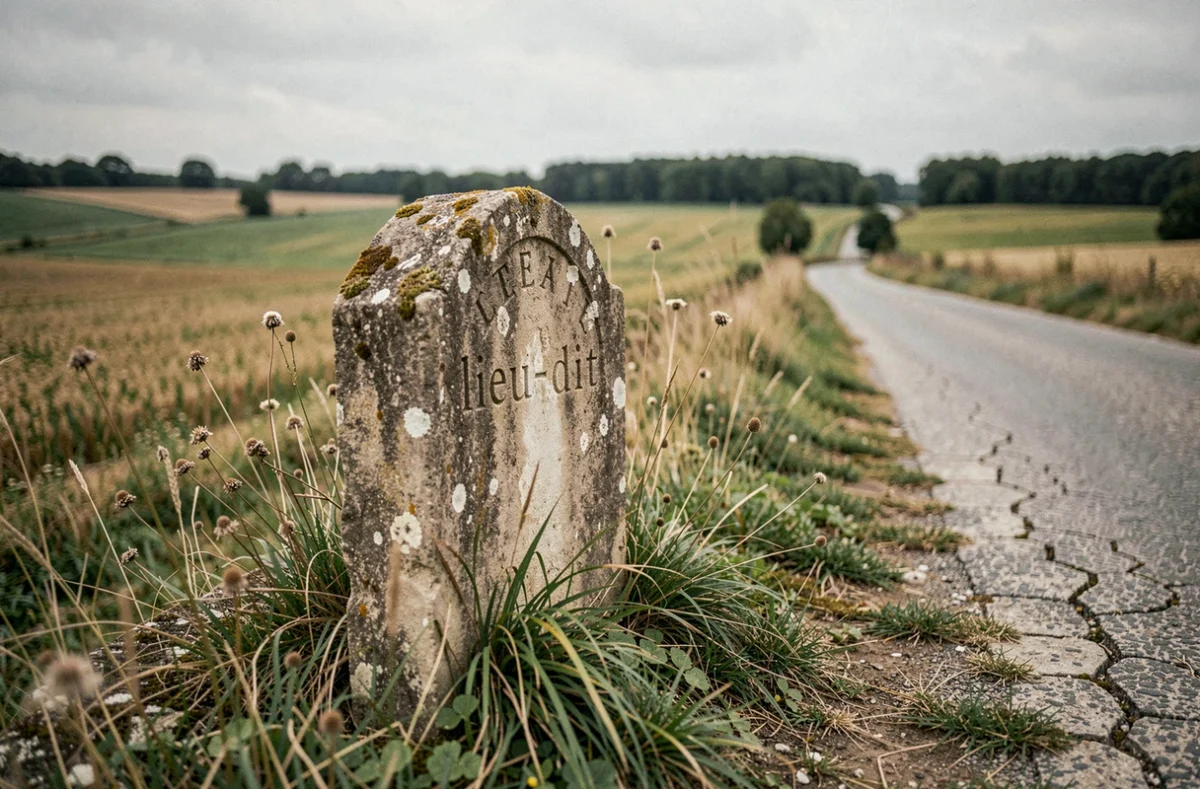
Place name, hamlet, village: these three terms refer to distinct realities in French territory, but none has a unique and fixed administrative definition. Their meaning varies depending on whether one considers the cadastre, urban planning code, or local usage. Understanding what separates them requires looking at the concrete criteria that distinguish them: presence or absence of dwellings, continuity of built structures, collective facilities, and legal significance.
Place name, hamlet, and village: what urban planning law really says
The confusion between these three concepts stems from a French peculiarity: no law establishes a universal population threshold for transitioning from one to another. The term “village” is not a general administrative category with a unique national definition. Its interpretation depends on the context, urban planning, statistics, addressing, or local usage.
It is in the urban planning code that the distinction takes on concrete significance, particularly in coastal areas. Article L. 121-8 of the urban planning code regulates the extension of urbanization in coastal municipalities: it must occur in continuity with existing towns and villages. This rule gives the word “village” a particular legal significance, different from its common meaning. The same built ensemble can therefore be classified as a hamlet or a village depending on the applicable urban planning document.
To delve deeper into the distinction between place name and village in a real estate context, the criteria used by local case law are often decisive.
Comparative table: place name, hamlet, and village in France
The table below summarizes the operational criteria that allow for the differentiation of these three forms of settlement on the territory.
| Criterion | Place Name | Hamlet | Village |
|---|---|---|---|
| Mandatory Dwellings | No (can be a field, a wood, an intersection) | Yes (small group of houses) | Yes (more significant concentration) |
| Name Origin | Topographical or historical feature | Local usage, often related to agricultural exploitation | Historical parish or communal center |
| Collective Facilities | None | Rare or absent | Church, town hall, sometimes commerce or school |
| Specific Administrative Status | None (cadastral marker) | None (outlying area of the municipality) | Can be the municipal capital |
| Urban Planning Significance (Coastal Law) | No specific significance | Limited or prohibited extension | Possible urbanization in continuity |
| Cadastral Role | Yes (name of cadastral section) | Sometimes confused with the place name | Distinct from the place name |
What emerges from this comparison is that the place name does not imply any permanent human presence. A field, an intersection, or a wood can bear a place name in the cadastre without a single house being built there. The hamlet implies dwellings but remains an outlying area of the municipality, without its own institutional life.
Hamlet or village: the criteria that determine the classification
Before the Revolution, the distinction relied on concrete markers. The village had a parish church, the town had a market (subject to administrative authorization), and the hamlet had neither. This historical framework has lost clarity with the creation of municipalities in 1789.
Today, the presence of collective facilities remains the most discriminating criterion. A village is recognized by the combination of several elements:
- A church or historical place of worship, even disused, that reflects the former parish status
- A town hall or administrative annex, a sign of a municipal capital role
- One or more shops, a school, or a proper cemetery, markers of organized collective life
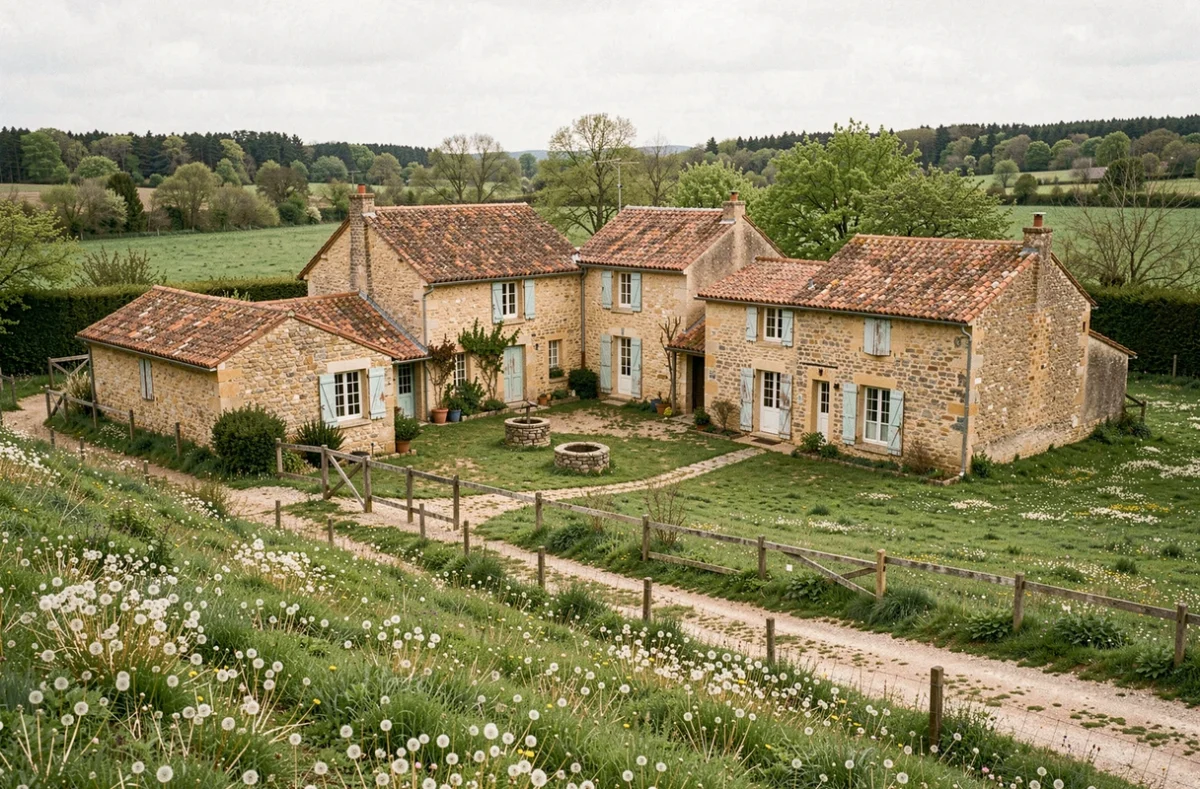
The hamlet, on the other hand, is characterized by a small group of buildings isolated from the communal center. It does not have these facilities. It often appears on maps as an “outlying area,” a technical term that designates a built ensemble separated from the main town of the municipality.
In coastal areas, this difference has direct consequences on the right to build. The extension of urbanization is allowed in continuity with a village, but not with an isolated hamlet. The classification retained in the local urban planning plan (PLU) therefore determines the buildability of a plot.
Cadastral place name and postal address: a frequent confusion
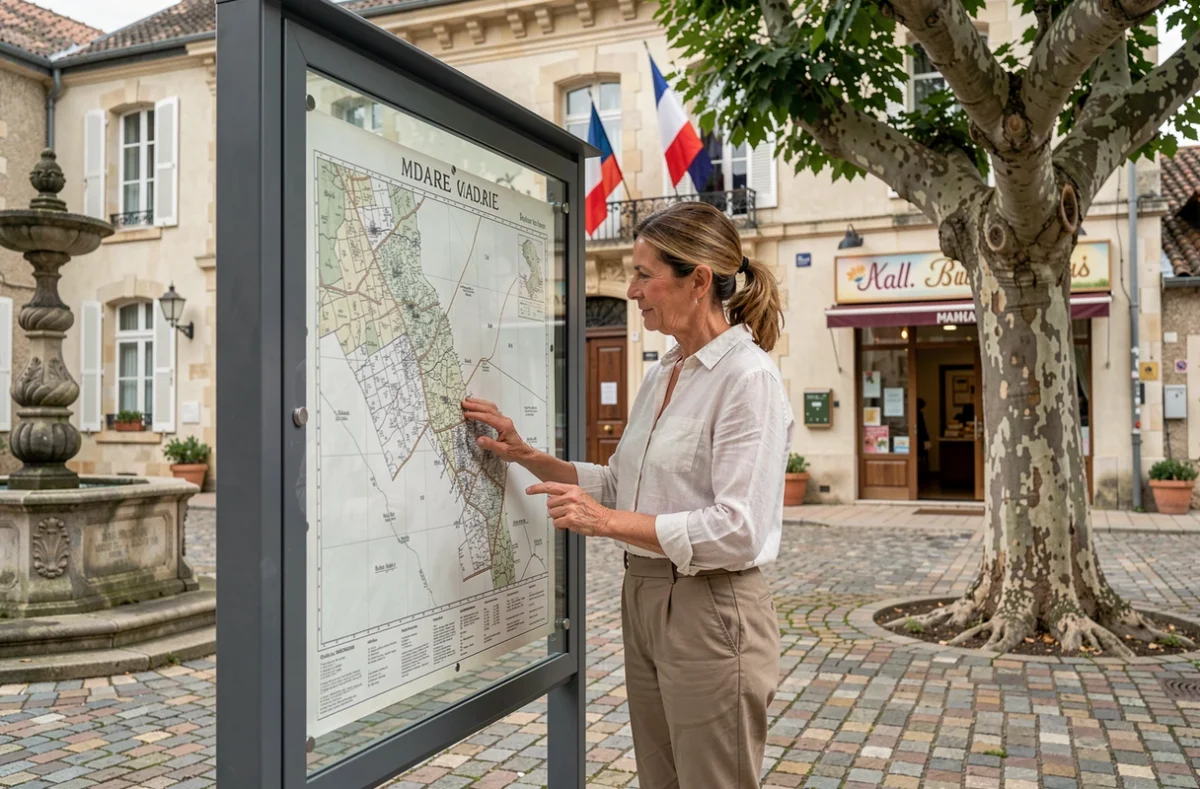
Many property owners discover the concept of place name at the time of a real estate purchase or a cadastral declaration. The place name is primarily a toponymic marker inherited from the Napoleonic cadastre. It identifies a plot or area by a name related to geography, history, or a former land use (“Les Granges,” “La Croix du Bois,” “Le Pré Rond”).
A inhabited place name can be confused with a hamlet, but the difference lies in the very nature of the term. The place name names a location. The hamlet describes a grouping of dwellings. A place name can contain a hamlet but can also consist of just a field or a forest.
- In the cadastre, the place name serves as a reference for locating plots outside named roads
- For postal addressing, the place name sometimes replaces the street number in rural municipalities without standardized addressing plans
- The National Address Base is gradually replacing addresses by place name with street numbers, which alters the visibility of these historical toponyms
This evolution in addressing does not erase the place name from the cadastre, but it reduces its everyday usage. Notarial acts continue to mention the place name as a reference for location.
Place name, hamlet, and village do not form a graduated scale but three concepts that intersect without overlapping. The place name pertains to cadastral toponymy, the hamlet describes a form of dispersed habitat, and the village derives its classification from its historical role and collective facilities. In practice, it is the applicable urban planning document (PLU, municipal map) that decides, plot by plot.