Preparing coffee for 30 people is not just about multiplying the dose for one cup by 30. The type of machine, the chosen drink format, and the profile of the guests radically change the amount of ground or whole coffee beans to be prepared. Starting with an approximate estimate risks running out halfway through the event or wasting half a kilo.
Cup dosage and preparation method: the foundation of the calculation
Before thinking about the number of guests, you need to establish a baseline: how many grams of coffee for one cup, depending on the machine used. Have you noticed that a strong espresso and a long filter coffee have completely different tastes, as well as different weights?
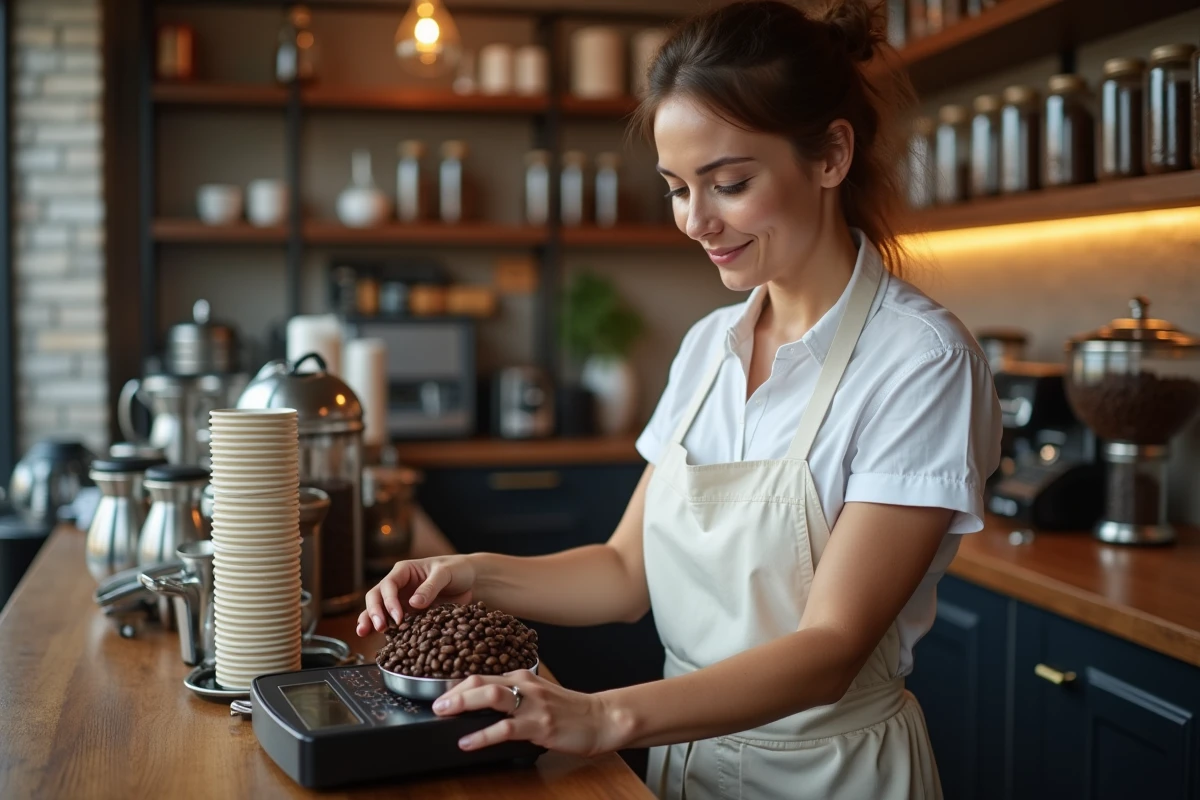
For a classic espresso, count about 7 g of ground coffee per cup. A double espresso is around 14 g. A cup of filter coffee requires between 7 and 10 g for 150 ml of water.
The percolator remains the most suitable solution for 30 people. This type of professional coffee maker allows for large quantities to be prepared at once. The recommended dosage is around 7 to 10 g of ground coffee per 150 ml cup. To help you calculate the ideal amount of coffee, start from this base and adjust according to the desired intensity.
If you opt for a standard filter coffee maker, you will likely need to run several batches. Automatic bean machines, on the other hand, prepare cup by cup, which extends the service time for a group of this size.
- Percolator: 7 to 10 g per cup, batch preparation, ideal for groups of more than 20 people
- Filter coffee maker: 7 to 10 g per cup, limited capacity (10-15 cups per cycle generally)
- Automatic bean machine: 7 to 14 g per cup depending on the setting, slower individual service
- Batch pour-over method (without electricity): same dosage as filter, but with reduced ecological impact compared to capsules according to the ICO Coffee Sustainability Report (April 2026)
Gendered consumption profiles and caffeine threshold: adapting the quantity to the actual group
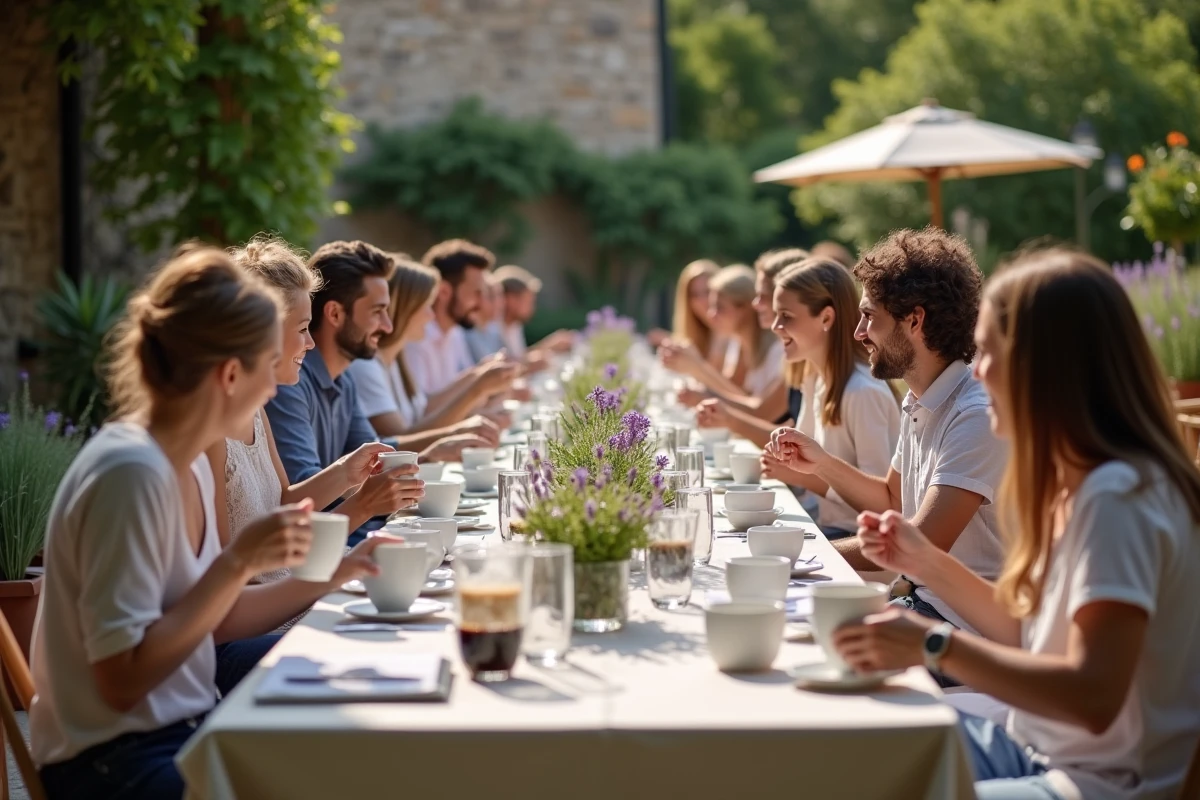
Not all guests drink the same thing. Some will have two or three cups in the morning, others will want only one, and a few do not drink coffee at all.
Consumption data shows differences based on gender. Men consume more coffee on average than women. At a mixed professional event of 30 people, planning the same amount for everyone overestimates the needs of one part of the group and underestimates those of the other.
Planning for an average of 1.5 cups per woman and 2.5 cups per man provides a more realistic estimate than a flat rate of 2 cups for all. In a group of 30 made up equally, this represents about 60 cups in total rather than the 60 that a simplistic calculation would also yield, but with a better distribution of the proposed intensity.
The issue of caffeine goes beyond comfort: it touches on health. According to Doctissimo, a specific number of daily cups is associated with a neuroprotective effect on the brain, but beyond a certain threshold, the benefits reverse. Offering a decaffeinated alternative caters to both heavy consumers and sensitive profiles (pregnant women, people on medication).
Since January 2026, European regulations have also mandated compulsory labeling of caffeine content for collective catering buffets. If you are organizing a professional event with a beverage service, this point is no longer optional.
Total amount of ground coffee for 30 people: the concrete calculation
Let’s move on to the calculation. Let’s start with a cautious assumption: each guest consumes an average of 2 cups of coffee, totaling 60 cups.
With a dosage of 8 g per cup (the middle of the range for a percolator), you need 480 g of ground coffee. Rounding up, plan for 500 g, or half a kilo.
This base figure adjusts in two cases:
If the event lasts more than three hours or takes place in the morning (breakfast, morning seminar), consumption increases. Feedback from caterers indicates a 20 to 30% overconsumption during hybrid events combining in-person and video conferencing, linked to participants’ digital fatigue. For a hybrid event of 30 people, aim for 600 to 650 g of ground coffee.
If you serve whole beans with an automatic machine, the loss is slightly higher than with pre-ground coffee. Plan for 10 to 15% more than the theoretical calculation.
Water, milk, and accompaniments: what the coffee calculation alone overlooks
The amount of coffee is not enough. You also need to plan for water. For 60 cups of 150 ml, that represents 9 liters of water. Add an extra liter for machine rinsing or slightly more generous cups.
Planning for 10 liters of water for 30 people covers the coffee service without stress. If you also offer tea or infusions on the same buffet, double the amount of hot water available.
On the accompaniment side, milk (or its plant-based alternatives) is often underestimated. Count about 30 ml per cup for those who take it, which is roughly a third of the group. This gives about 600 ml of milk at a minimum.
- Sugar cubes or sticks: plan for 2 doses per person, totaling around sixty
- Milk or plant-based drink: at least 600 ml, more if you offer cappuccinos
- Decaffeinated: a separate reserve of about 100 to 150 g of ground coffee, sufficient for about ten cups
Whole beans or ground coffee for a group: which format to choose
Whole bean coffee, freshly ground, offers a better result in the cup. The trend has accelerated since 2024 in professional events, with the massive adoption of bean machines in offices. Organizers increasingly favor Fairtrade certified blends.
However, pre-ground coffee remains more practical for quick service with a percolator. No need for a grinder, no adjustment of grind size, no risk of clogging. For 30 people served in less than an hour, classic ground coffee does the job without complications.
The choice also depends on the available equipment. An automatic bean machine processes one cup at a time: for 60 cups, service easily takes 45 minutes. A percolator loaded with ground coffee delivers 30 cups in one batch, in about fifteen minutes.
Keeping 500 g of ground coffee on hand for a percolator, planning a separate decaffeinated option, adjusting upwards for a hybrid or morning format: the margin for error quickly diminishes when the dosage per cup and the group’s profile are established from the outset.