
An interior that truly changes its atmosphere rarely depends on a pile of new purchases. The key decisions lie in the choice of finishes, air quality, and the ability to reuse what is already there—including materials recently covered by European Regulation 2024/3110, adopted on 27 November 2024, which provides for more information on durability and specific treatment of second-hand and remanufactured products.
VOC labeling and finishes: what the A+ rating doesn’t cover
An A+ label does not guarantee healthy indoor air. It indicates the emissions of certain volatile organic compounds from an individual product, but not its full composition or the combined effect of several materials in the same living space.
In practical terms, applying A+-rated paint to a wall and then installing A+-rated flooring says nothing about how the two interact. Drying and airing times remain crucial. Applying a wood stain or decorative coating with the windows closed in winter cancels out much of the benefit claimed by the label.
For a decorating project involving paint, plaster, and new furniture, we recommend ventilating the room for at least as long as the manufacturer specifies, and waiting until the finishes are completely dry before installing textiles such as curtains and rugs. This sequence helps prevent residual VOCs from becoming trapped in the fibers.
Specialist resources explain the trade-offs between aesthetics, budget, and indoor air quality: https://www.vivezdecorez.com offers advice focused on these issues.
Reuse in interior decorating: real costs and practical limitations
Reuse is a worthwhile decorating option, but its share remains small compared with new furniture. Today’s enthusiasm for second-hand goods should not obscure a simple fact: buying used takes time, and the true cost goes beyond the price tag.
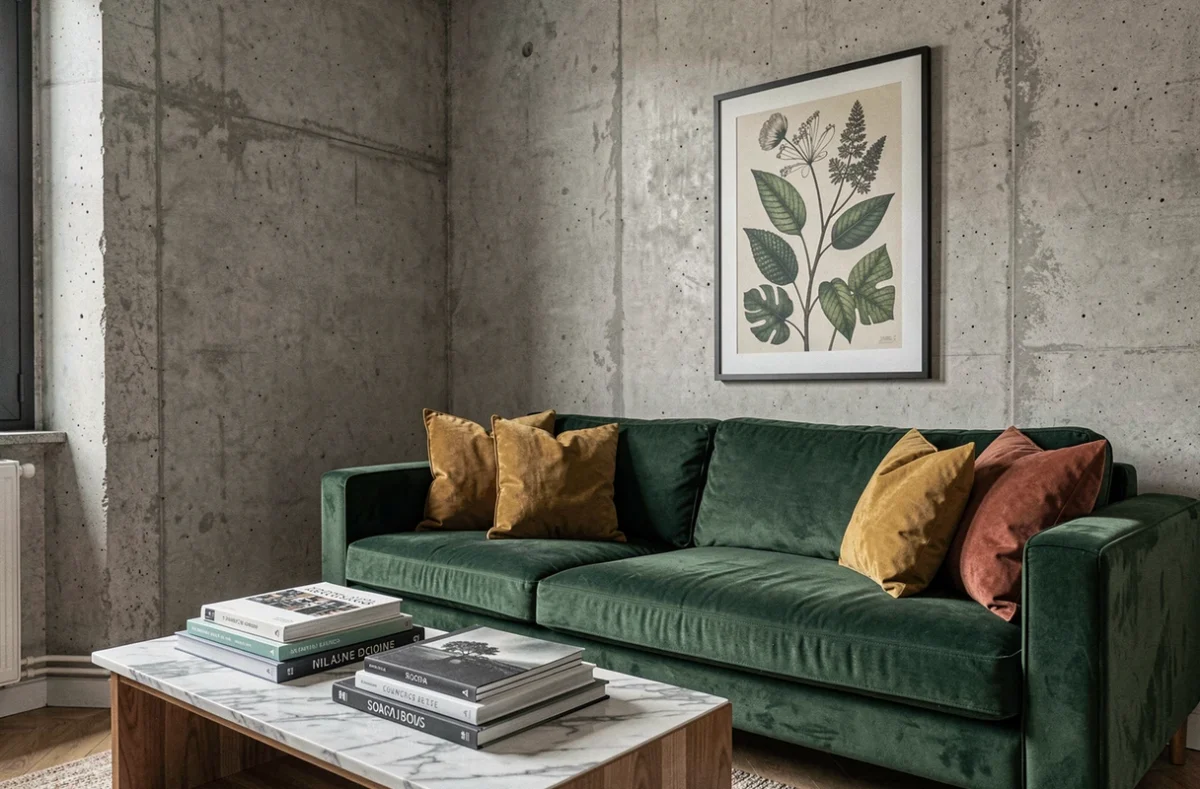
A second-hand find often needs sanding, treatment, and sometimes replacement hardware. Those hours of work have value. Reuse centers and repair services offer items that have already been restored, reducing this hidden extra cost, but their selection depends on what comes in.
European Regulation 2024/3110 changes the landscape for reused construction materials. It provides an information framework covering the durability and characteristics of second-hand products. For a decorating project involving reclaimed tiles, old beams, or reclaimed parquet flooring, this traceability makes it easier to make informed technical choices.
Choosing between reuse and buying new
- Prioritize reuse for items with a strong visual impact and few technical requirements: light fixtures, frames, small occasional tables, and decorative objects. The effort-to-result ratio is favorable.
- Buy new for items subject to safety or emissions standards, such as flooring, paint, and insulation. Traceability and warranties justify the extra cost.
- Turn to a reuse center or repair workshop when a structurally sound piece of furniture needs refinishing. It will still cost less than buying new, and the result is often more distinctive.
Color and atmosphere: transform a room with a single wall
Painting a single wall changes the atmosphere more than repainting an entire room in a neutral shade. The choice of wall matters as much as the color: one that receives direct natural light enhances warm hues, while a wall at the back of the room can absorb dark tones without making the space feel smaller.
Saturated palettes—terracotta, deep sage green, slate blue—work best on limited surfaces. Applied to all four walls, they can tire the eye and make the room feel smaller. On a single wall, they create a focal point that gives the room structure without requiring major work.
Decorative accessories: fewer objects, more cohesion
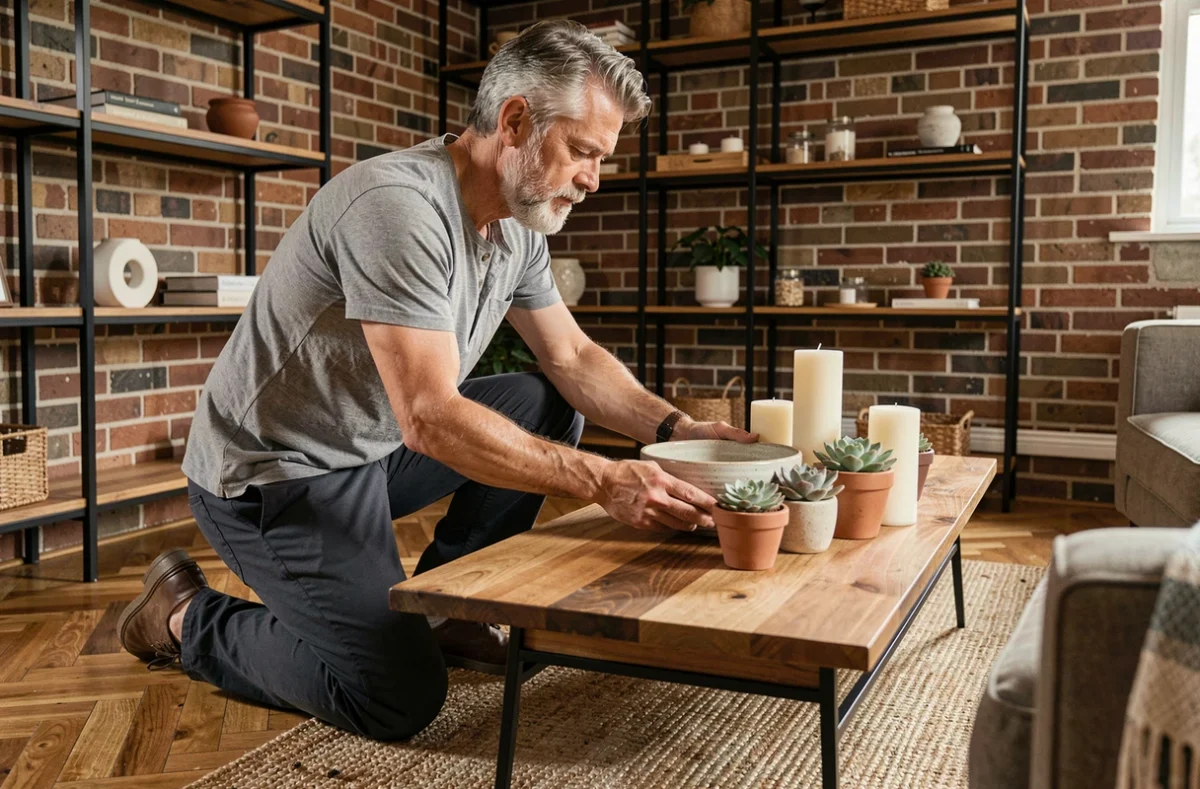
Too many accessories dilute the visual impact. Three carefully chosen objects on a shelf make a stronger impression than a dozen knickknacks. The principle is straightforward: the eye looks for an anchor, and too many visual stimuli scatter attention.
The most reliable selection criterion is consistency in materials, rather than consistency in style. A stoneware vase, a raw wood frame, and a brass candlestick can work together if their finishes share a matte texture or visible grain. Mixing polished chrome, glossy ceramic, and lacquered plastic in the same field of view creates visual noise that is hard to fix.
Home decorating budget: focus spending where it makes the biggest difference
Lighting transforms a room faster and at lower cost than furniture. Replacing a central ceiling light with two or three light sources at different heights radically changes how the room’s space and atmosphere are perceived.
- A reading lamp beside an armchair creates an intimate nook without physically dividing the room.
- Indirect lighting—a LED strip behind a low cabinet or a floor lamp—adds depth to a plain wall.
- Bulbs with adjustable color temperature let you switch from a work-friendly atmosphere to a relaxing one without changing the light fixture.
Textiles are the second best-value investment. Cushions, a sofa throw, or a linen curtain can change the feel of a living room for a fraction of the cost of a piece of furniture. Investing in a heavyweight textile ensures a good drape and greater durability than budget products that lose their shape after a few washes.
The final decision concerns the floor. A properly sized rug (it should extend under the sofa’s front legs, not float in the middle of the room) visually anchors an open-plan living area. If it is too small, it has the opposite effect and makes the room feel smaller.
Transforming an interior with style depends less on how much you buy than on how carefully you choose. A well-painted wall, repositioned lighting, a few objects made from complementary materials, and a quality textile are enough to change the atmosphere of a room. Reuse completes the equation when applied to the right items, without overlooking the real time and restoration involved.